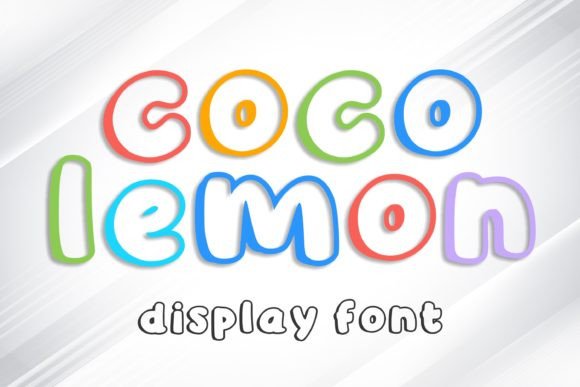
Coco Lemon: A Playful Display Font for Your Brand
Building a brand that feels authentic and connects with customers often comes down to the smallest details. As a small business owner, I have learned that every touchpoint matters, from the logo on your storefront to the font used in an Instagram story. When you are trying to stand out in a crowded market, choosing the right display font can make the difference between being noticed and blending into the background. That is where Coco Lemon comes in. It is more than just a cute typeface; it is a strategic design asset that brings warmth, playfulness, and personality to your business materials.
Why Personality Matters in Your Brand Identity
In the world of modern typography, fonts are not just tools for reading; they are vehicles for emotion. Coco Lemon is a display font designed with a cute and playful aesthetic. Its rounded edges and bouncy character give it a friendly vibe that immediately lowers barriers with your audience. For entrepreneurs running boutique shops, children's brands, or creative services, this mood is essential. It signals approachability and fun, which are key traits for building trust with families, young adults, and lifestyle-focused consumers.
When you select a creative font like Coco Lemon, you are making a statement about who you are as a business. If your brand promises joy, simplicity, or a handcrafted feel, this typeface aligns perfectly with those values. It avoids the cold, corporate stiffness of standard system fonts and instead offers a visual voice that feels human and inviting. This consistency in tone helps your brand become recognizable and memorable across all platforms.
Real-World Applications for Small Businesses
The true value of a premium font lies in its versatility across different mediums. Coco Lemon shines when used in specific contexts where visual impact is more important than dense text readability. Here is how you can practically integrate it into your business operations:
- Logo Design: For a bakery, a daycare center, or a handmade toy shop, using Coco Lemon in your logo instantly communicates your niche. The playful curves mimic the organic shapes found in baked goods or soft toys, creating a subconscious link between your name and your product.
- Packaging Design: Product labels are prime real estate for branding. Imagine a jar of artisanal lemonade, a box of bath bombs, or a bag of organic snacks. Using Coco Lemon for the product name on the label adds a pop of color and charm that stands out on a retail shelf.
- Social Media Graphics: In the fast-scrolling world of Instagram and Pinterest, you need headlines that stop the thumb. Use Coco Lemon for quotes, sale announcements, or event dates on your social media posts. Its bold nature ensures your message grabs attention even at smaller thumbnail sizes.
- Merchandise and Stickers: If you sell branded merchandise like tote bags, t-shirts, or stickers, this font works beautifully. It scales well for print-on-demand items and maintains its character whether it is printed on fabric or glossy paper.
- Menus and Flyers: For a café or a kids' party planning service, use this font for section headers on menus or main titles on flyers. It sets a welcoming tone before the customer even reads the first item.
Strategic Usage: Headlines vs. Body Text
While Coco Lemon is visually striking, it is crucial to understand its limitations as a display font. Like most decorative typefaces, it is best suited for short bursts of text rather than long paragraphs. Using it for body copy on a website or a detailed contract can strain the reader's eyes and dilute the professional look of your content.
Instead, reserve Coco Lemon for headlines, logos, and accent text. Think of it as the "loud" voice in your conversation—the part that gets the initial reaction. For the rest of your communication, pair it with a clean, readable font. This balance ensures your brand looks both fun and functional. For example, on a product label, use Coco Lemon for the product name but switch to a simple sans serif font for ingredients and net weight. This hierarchy guides the customer's eye naturally while maintaining legibility.
Mastering Font Pairing for Professional Results
One of the biggest mistakes new business owners make is overcomplicating their typography. The secret to a polished look is effective font pairing. Since Coco Lemon is expressive and rounded, it pairs exceptionally well with neutral, structured typefaces. A clean sans serif font like Helvetica, Montserrat, or Open Sans provides the necessary contrast to let the display font shine without competing for attention.
If your brand leans slightly more traditional or elegant, you might try pairing Coco Lemon with a classic serif font for your body text. This combination creates a unique blend of whimsy and sophistication, perfect for a boutique that wants to feel trendy yet established. Avoid pairing it with other heavy script fonts or overly decorative styles, as this can create visual clutter and make your materials look amateurish. Stick to one personality-driven font and one neutral workhorse to maintain a cohesive brand identity.
Readability Across Digital and Print Touchpoints
As an entrepreneur, your brand lives everywhere, from a tiny mobile screen to a large billboard. When testing Coco Lemon, consider how it performs in these different environments. On mobile devices, ensure that the font size is large enough for the characters to remain distinct. Because of its playful shape, some letters might lose definition if scaled down too much. Always preview your designs on actual devices before finalizing them.
For printed materials like business cards or packaging, the font holds up remarkably well due to its thick strokes and clear forms. However, always check the minimum size required for your printer. A font that looks great on a monitor might appear muddy if printed at 6 points on textured paper. Testing your designs in real-world conditions is a non-negotiable step in the branding process. Print a sample label or view your website on a phone to ensure the typeface remains crisp and inviting.
Licensing and Commercial Use Considerations
Before you download and install any premium font for your business, you must verify the licensing terms. This is a critical step that many independent creators overlook. Just because a font is available for personal use does not mean it is free for commercial projects. If you plan to use Coco Lemon on products you sell, such as packaging, clothing, or digital templates, you typically need a commercial license.
Using a font without the proper license can lead to legal issues and damage your reputation. Ensure that the license covers your specific needs, including web usage, print advertising, and merchandise production. Investing in the correct license protects your business and supports the designers who create these valuable design assets. It also gives you peace of mind, knowing your brand is built on a solid legal foundation.
Bringing Consistency to Your Marketing
Ultimately, the goal of using a font like Coco Lemon is to create a consistent and trustworthy image for your business. When your logo, your social media posts, and your product packaging all speak the same visual language, customers begin to recognize and rely on your brand. It transforms a collection of random graphics into a unified identity.
Whether you are launching a startup, rebranding an existing shop, or simply looking to refresh your marketing materials, the right display font can elevate your entire operation. Coco Lemon offers the perfect balance of charm and utility for businesses that want to be seen as friendly, modern, and professional. By applying it strategically and respecting its role within your broader design system, you can create a brand presence that is not only beautiful but also effective at driving engagement and sales.